Design System Gamification
Overview
1. The Problem
Design systems often suffer from low engagement and adoption, with contributions being sporadic and lacking structured feedback. Teams struggle to motivate developers and designers to actively maintain, improve, and take ownership of shared component libraries.
2. The Solution
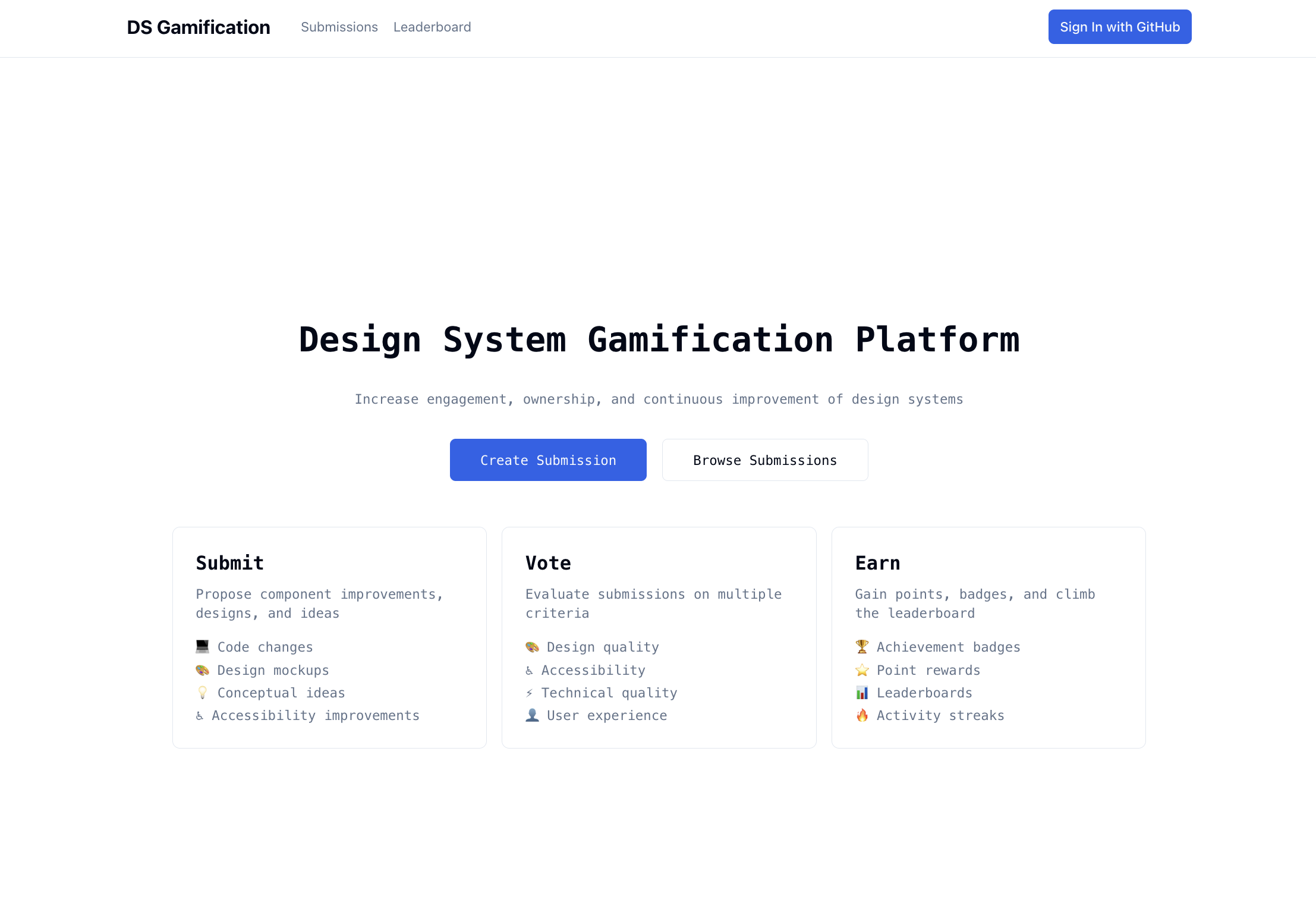
A gamification platform that transforms design system contributions into an engaging, rewarding experience. Contributors submit improvements (code, designs, or ideas), the community votes using multi-criteria scoring, and approved changes automatically generate GitHub pull requests—creating a structured, transparent workflow from idea to implementation.
3. Innovation and Features
4. Libraries and Frameworks
Design Process Summary
The platform was designed with a user-centered, iterative approach focused on reducing friction in the contribution workflow. We started by identifying key user personas—contributors, reviewers, and maintainers—and mapped their journeys to understand pain points in traditional design system contribution processes. The UI follows a component-driven design methodology, leveraging shadcn/ui as a foundation to ensure consistency, accessibility, and rapid prototyping. This allowed us to focus on solving user experience challenges rather than building UI primitives from scratch. We employed a progressive disclosure pattern throughout the interface—the submission flow guides users step-by-step, the voting system breaks complex feedback into digestible criteria, and the dashboard surfaces relevant information based on user role. Visual feedback through points, badges, and leaderboard rankings was designed to create immediate gratification and long-term motivation. The approval workflow was designed around transparency and trust, giving contributors visibility into where their submissions stand while providing maintainers with efficient tools for review. The side-by-side preview feature emerged from the need to make quality assessment quick and objective.