My Approach
"the 4 R's"
Reach | Render | Review | Remix
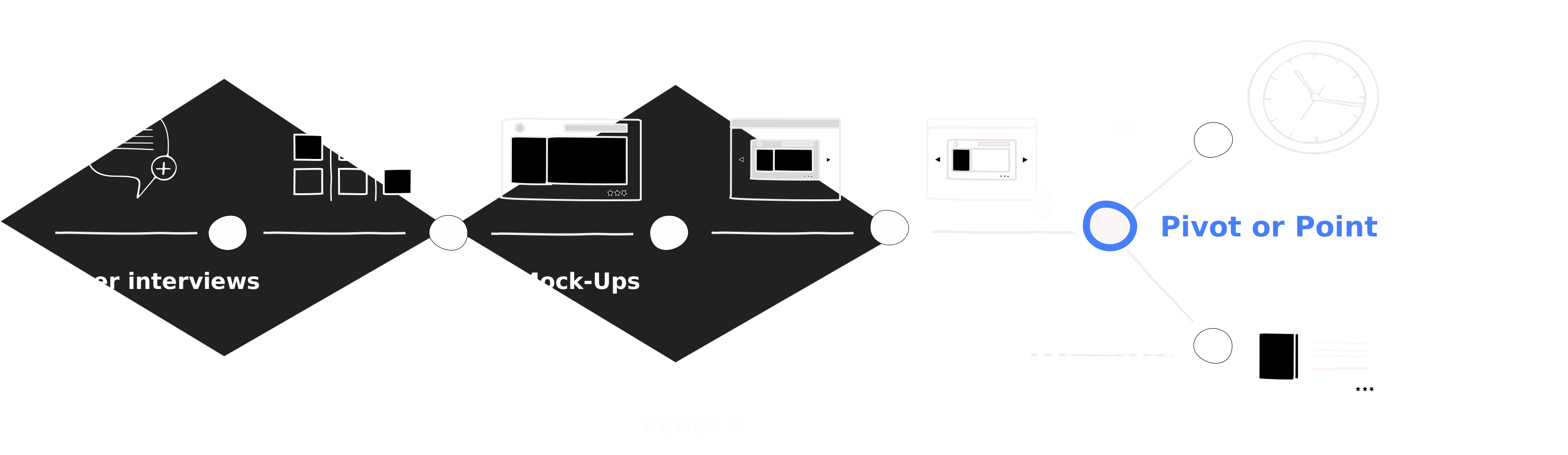
"It's my design approach, stay lean and green and you will learn a lot! It took me a long time to learn how to ask the right questions and let the people help me determine what they need. Don't do work in a bubble, REACH out to users, test your assumptions. RENDER some ideas at various fidelities or code and REVIEW and learn from independent feedback. REMIX your stuff accordingly, do this often and in small manageable iterations (I call it swinging for singles and not the fence) and you will be a winner."

1. Reach
Research and investigation uncover problems and opportunities. Engage directly with users about assumptions and ideas.
- •Learn what others do, use, and think
- •Observe surroundings, patterns, processes
- •Center "their ideas" rather than presenting yours
- •Determine priorities and "TOP 5" needs
- •Research unfamiliar concepts

2. Render
Visualization converts concepts into tangible form through progressive fidelity levels.
- •Avoid overcomplication
- •Progress from process diagrams to interfaces
- •Use contextual examples over dummy text
- •Consider group design studios
- •"Swing for singles, not homeruns"

3. Review
Rapid iteration requires structured feedback validation.
- •Prepare assumptions and questions beforehand
- •Ask open-ended questions for diverse responses
- •Withhold design intent to observe understanding
- •Synthesize notes for pattern identification
- •Prioritize insights and next steps

4. Remix
Apply learnings from research and prototyping to iterative improvements.
- •Leverage prior synthesis and insights
- •Maintain or increase fidelity levels
- •Explore physical, paper, and code prototypes
- •Emphasize information architecture and naming
- •Demonstrate interaction design (dropdowns, modals, popovers)
Design Artifacts
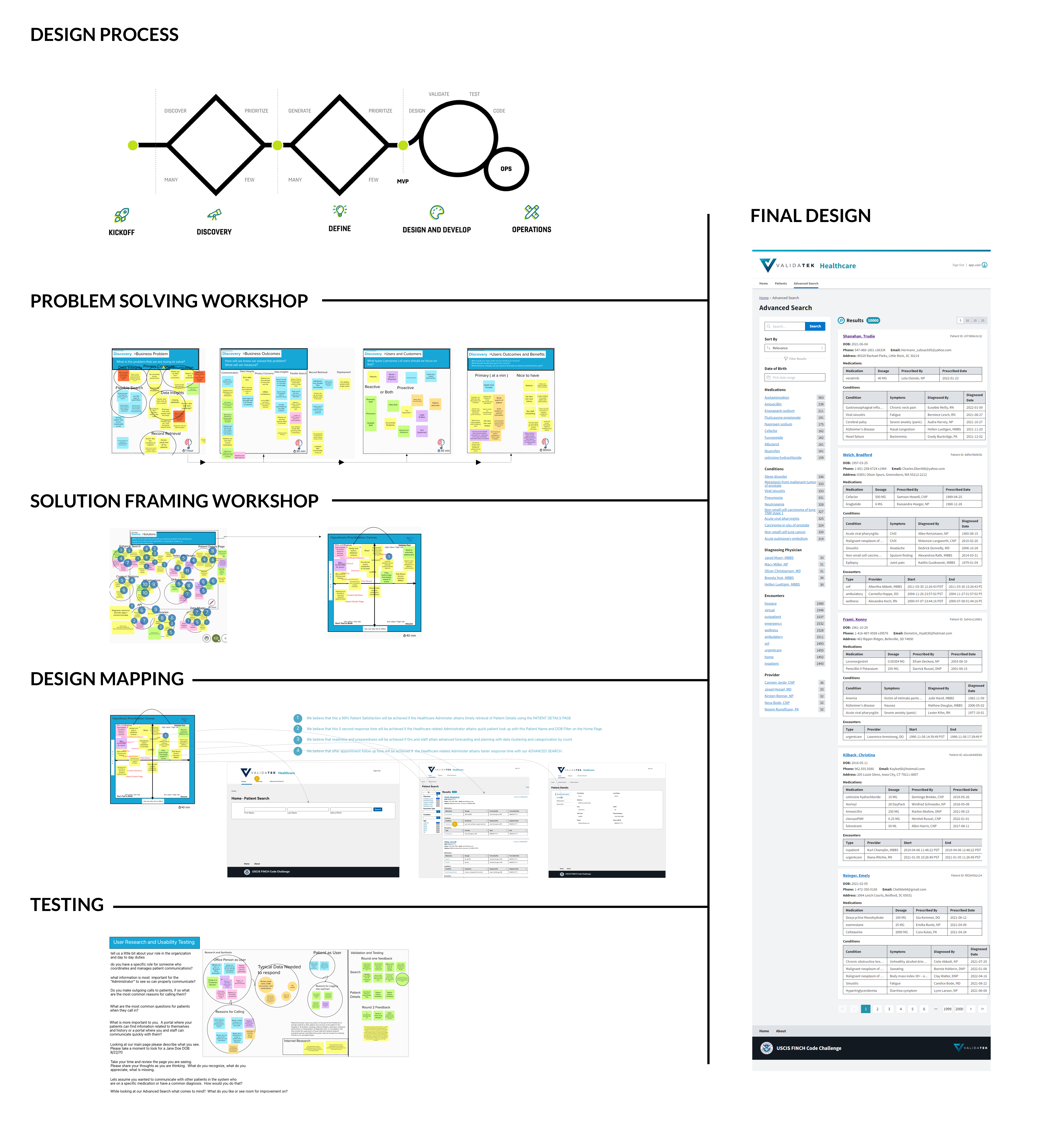
Workshop Sample
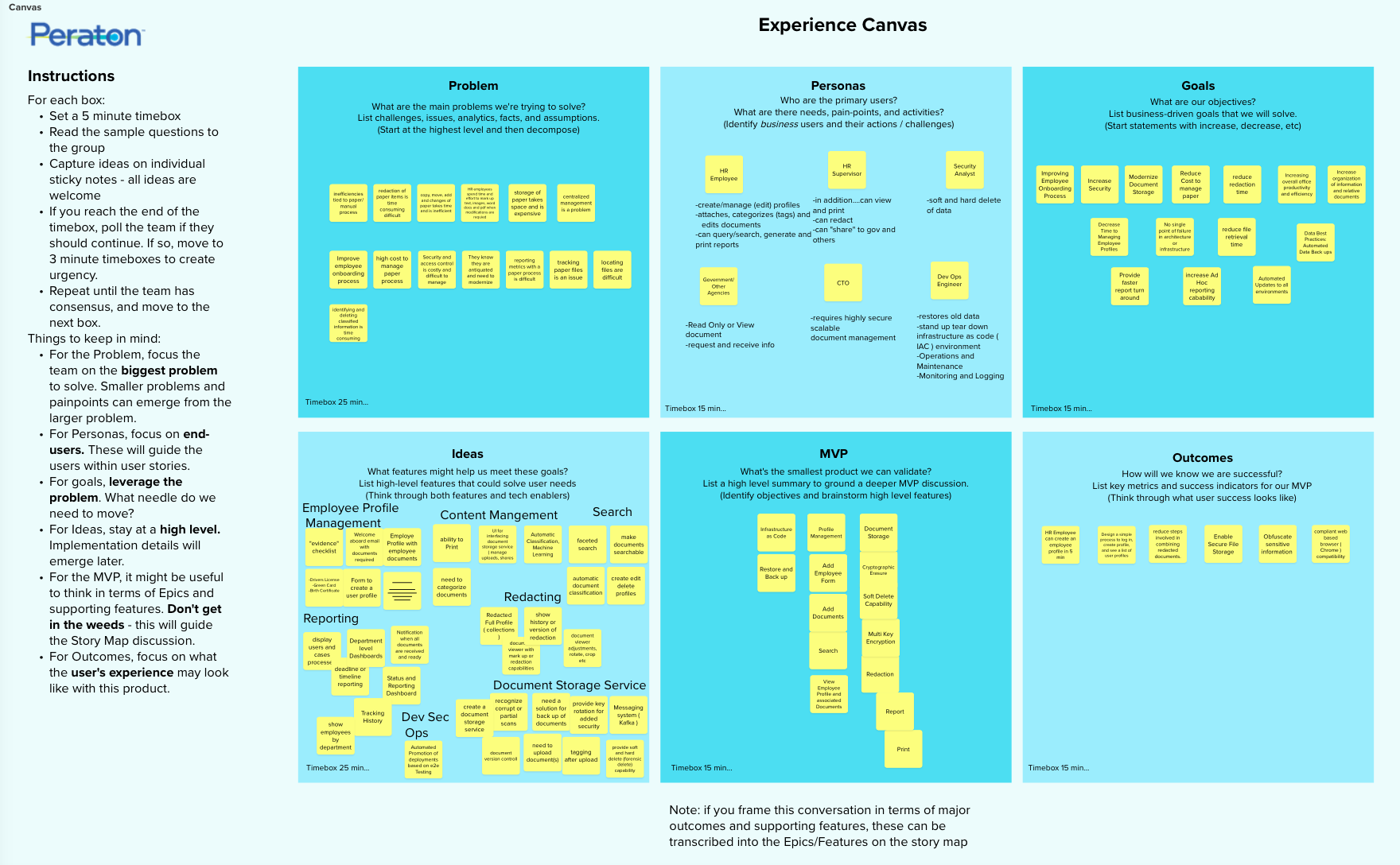
Experience Canvas
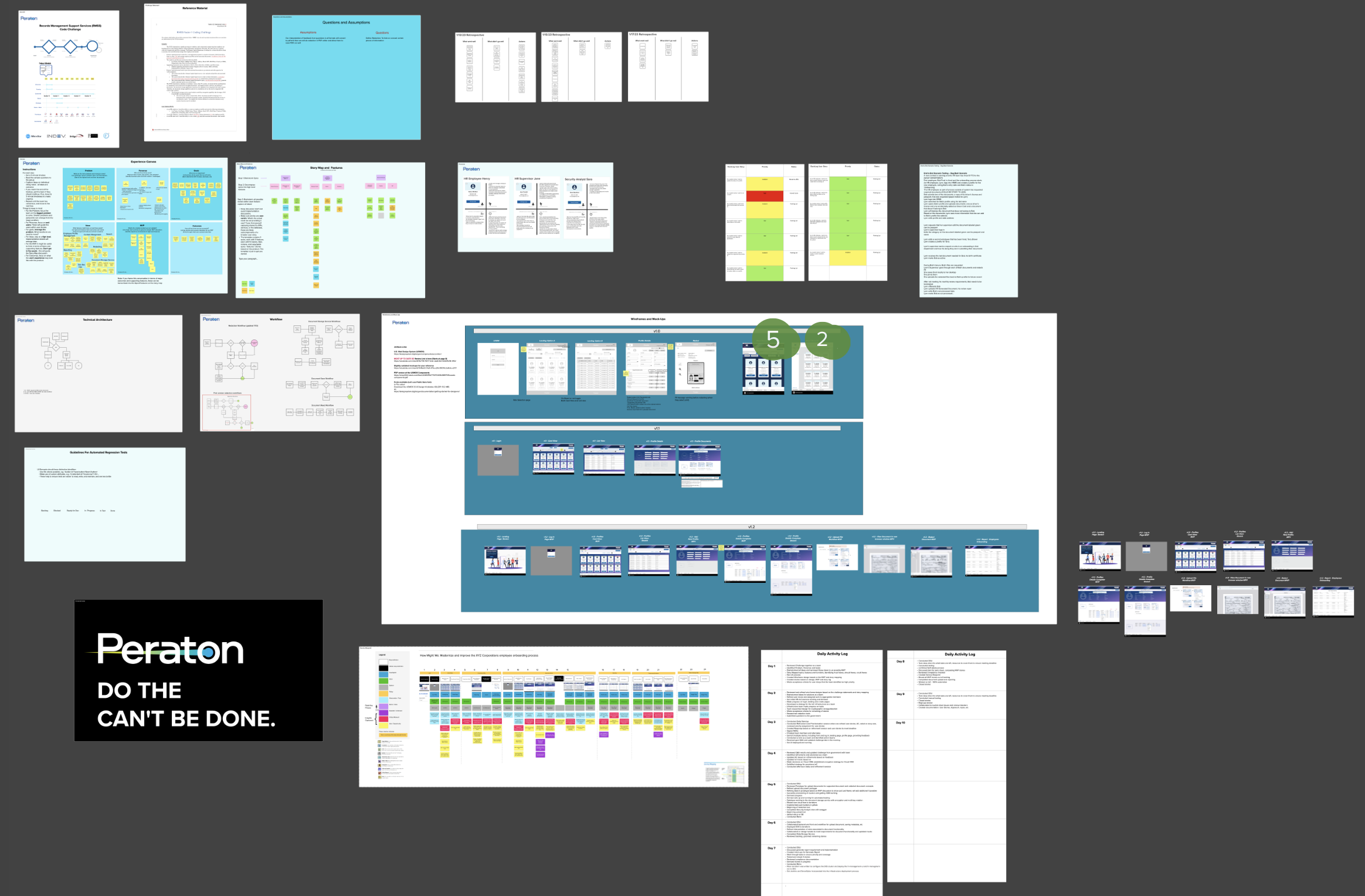
Design Sprint
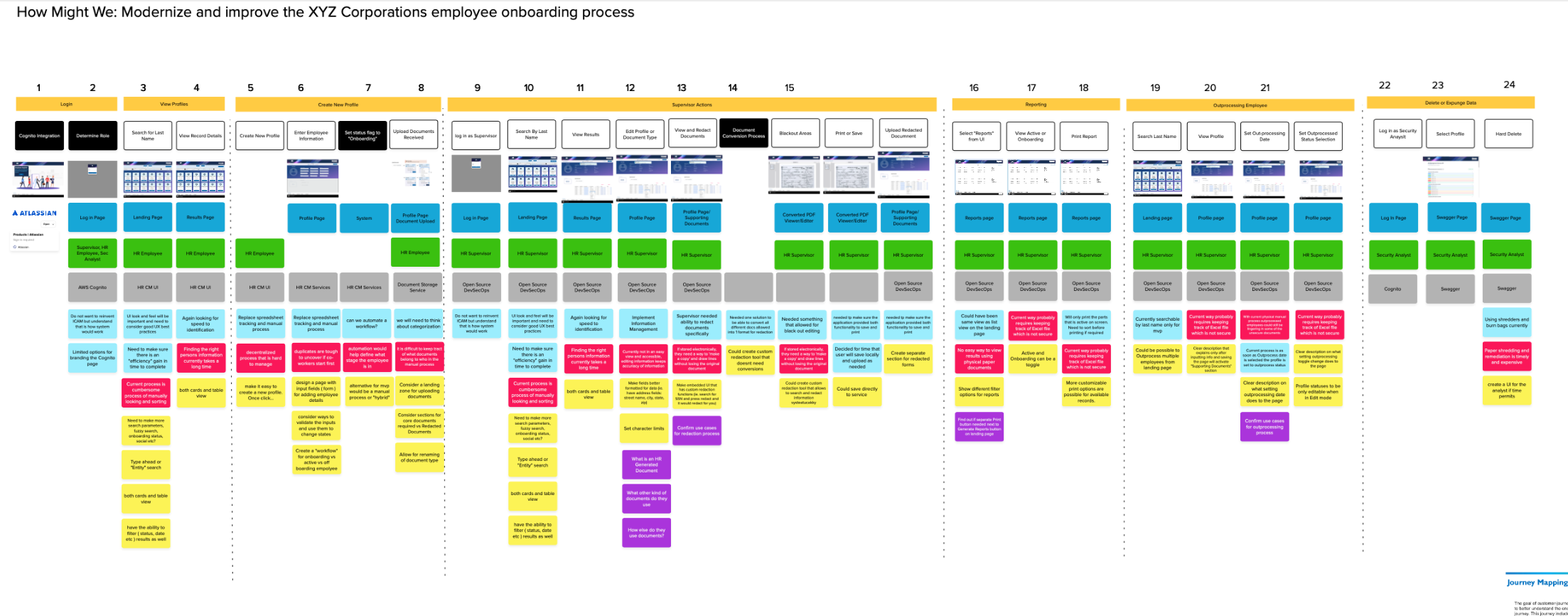
Service Blueprint
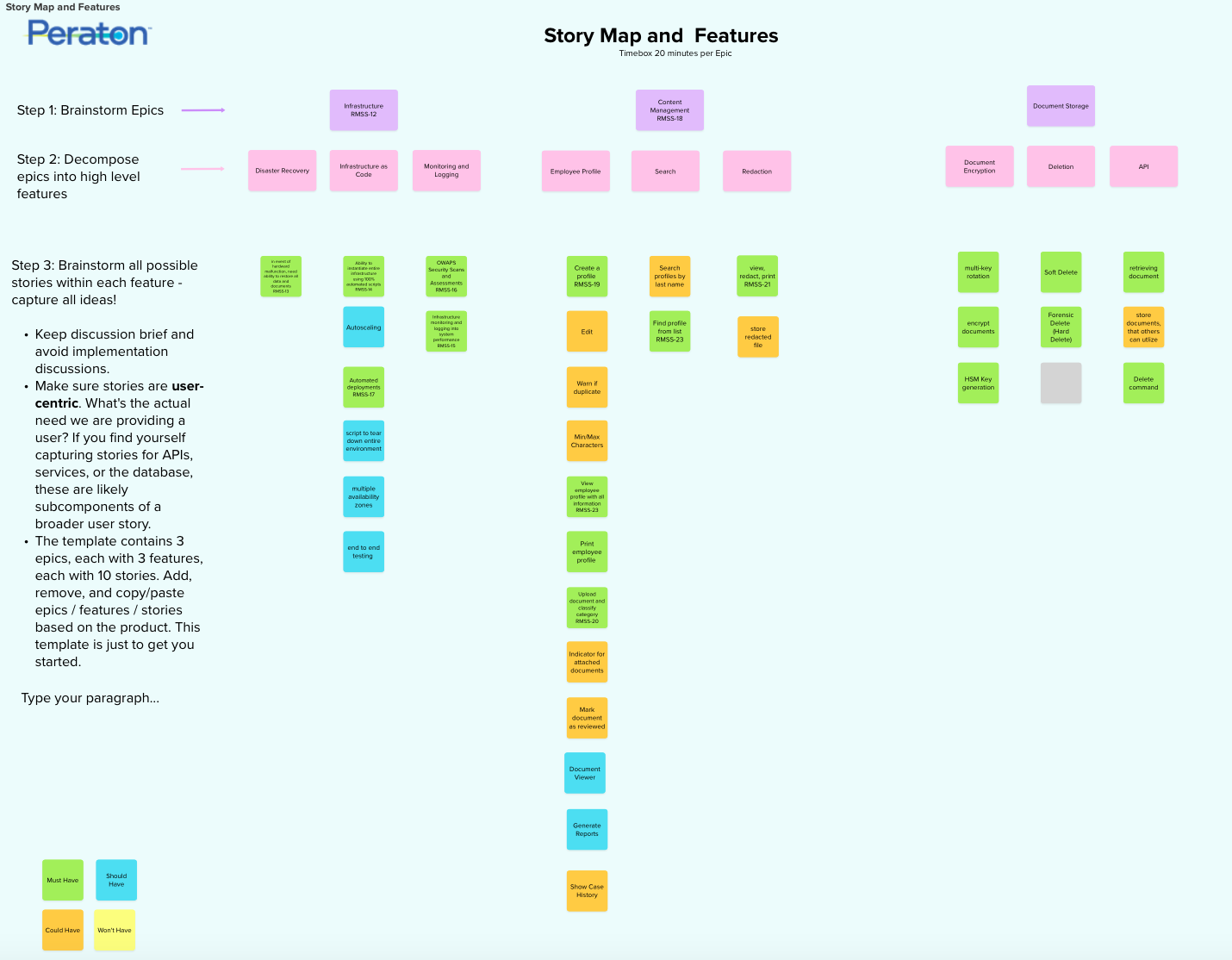
Story Mapping
Philosophy
Throughout my career, I've learned that the best solutions come from rapid iteration and continuous feedback. This approach has served me well from my early days building websites in 1995 to pioneering AI solutions with government contracts.
I believe in prototyping quickly, failing fast, and learning continuously. Every project is an opportunity to push boundaries and create something innovative that truly serves its users.