Algo Trading Platform
Overview
1. The Problem
Retail traders lack access to sophisticated automated trading infrastructure. Managing multiple broker connections, executing consistent strategies, and maintaining proper risk controls requires significant technical expertise and custom development that most individual traders cannot build themselves.
2. The Solution
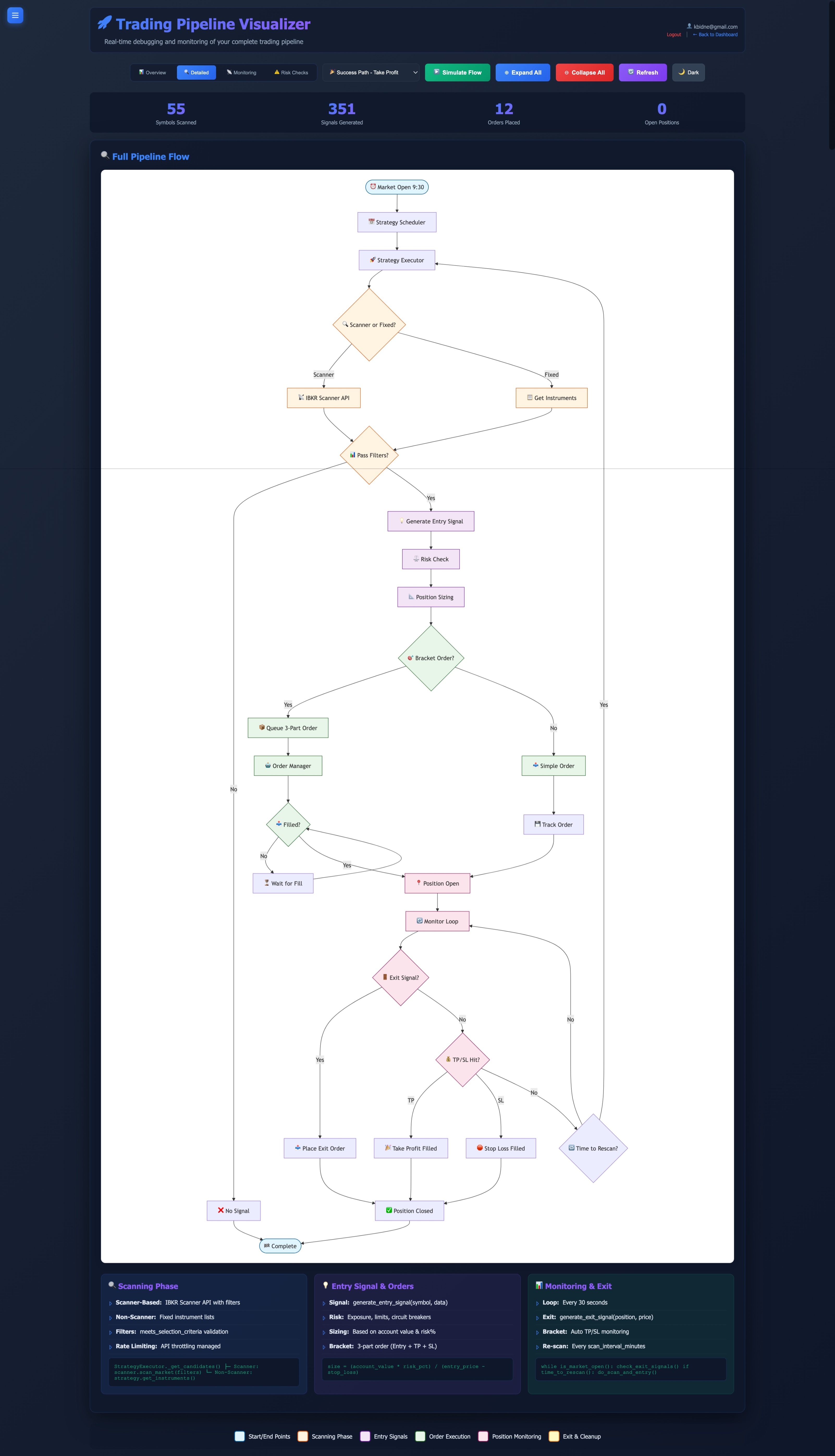
A multi-broker automated trading platform that abstracts broker complexity behind a unified interface. Users can define trading strategies through templates while the system handles execution, position management, and risk enforcement. The platform supports both Interactive Brokers (IBKR) and Alpaca with isolated multi-tenant data.
3. Innovation and Features
4. Libraries and Frameworks
Design Process Summary
The architecture evolved around core separation principles—keeping strategy logic independent from risk management to enable runtime configurability. A provider pattern was adopted for broker and sentiment integrations, allowing new providers to be added without changing core logic. The multi-tenant design was built from the ground up with JWT authentication and per-user data isolation. Documentation-driven development ensured AI agents could query validation rules via API, creating a 3-layer validation architecture (Backend enforcement → Human documentation → Agent access).